The Science
Collaboration
Monkeytronics is a Wellington based For Purpose Company, on a mission to solve challenging social and environmental issues using simple, high quality technology. Our approach is informed by research and science, and we place great value on collaboration with experts in their fields - which is why we are delighted to be working with the New Zealand Ministry of Education to make classrooms across New Zealand great places for our kids to grow and learn.
The Monkeytronics AirSmart monitor allows us to observe indoor environmental quality factors including acoustics, lighting and visual comfort, indoor air quality and thermal comfort. We are proud to have the opportunity to work with the New Zealand Ministry of Education on their mission to create quality learning environments across New Zealand schools for our kids.
Design for Quality Learning Spaces (DQLS)
The New Zealand Ministry of Education website contains a wealth of information regarding the Design of Quality Learning Spaces. It provides contact information should you have questions or need any clarifications, and feedback channels. For indoor air quality monitoring applications within New Zealand schools, Monkeytronics recommends that you refer to these resources.
- Design of Quality Learning Spaces (DQLS)
- DQLS : Acoustics
- DQLS : Lighting
- DQLS : Air Quality & Thermal Comfort
- DQLS : Reports & Tools
Specifications
| Measurement | Operating Range | Units | Accuracy |
|---|---|---|---|
| Relative Humidity | 0 - 100 % | % | 3.0 % |
| Temperature | 0 - 80 °C | °C | 0.3 °C |
| Carbon Dioxide | 400 - 10,000 ppm | ppm | 3.0% + 30 ppm |
| Luminous Intensity | 0 - 10,000 Lux | Lux | 5.0 % |
| Sound Levels | 129 dB SPL | dBA | 1 dB |
| Reverberation | 0 - 10,000 ms | ms | tbd |
| VOC | Index 0 - 500 | Ideal = 100 | N/A |
| Nitrogen Oxides | Index | Ideal = 1 | N/A |
| Formaldehyde | 0 - 1000 ppb | ppb | ±20 ppb / ±20% m.v. |
| Particulate Matter | 0 - 1000 μg/m³ | μg/m³ | 10% |
Carbon Dioxide
Of everything AirSmart measures in a classroom, carbon dioxide is often the one that surprises people the most. It's the gas we all breathe out, and in a closed room full of students it builds up fast.
Why is CO2 Concentration Important?
Imagine a room full of kids at school. They've all got a copy of a big old book about string theory. The teacher is reading aloud. So everybody is having a good time.
If it's a bit chilly outside, maybe they've closed the windows to keep the heat in. After a few hours, the concentration of carbon dioxide in the classroom may rise up to say 2000 parts per million (2000 ppm). This is common place. It plays out in schools all across New Zealand, every winter. The problem is that when CO2 gets above about 1500 ppm, some of the kids may start experiencing headaches, dizziness, restlessness, difficulty breathing, tiredness and an increased heart rate. And while it affects different people to different degrees, some of them can get really cranky. Studies have shown that an increase in carbon dioxide concentration of 1000 ppm can reduce student attendance by up to 0.9% in average annual daily attendance, which is an increase of 20% in student absence. It has also been shown that it can significantly affect concentration and cognitive function. A Harvard study monitored students' performance across a wide range of cognitive areas, and found a decrease in performance by anywhere from 20% to 70%. In the context of our kids' performance in school and exams, this could easily make the difference between an A grade and a C grade.
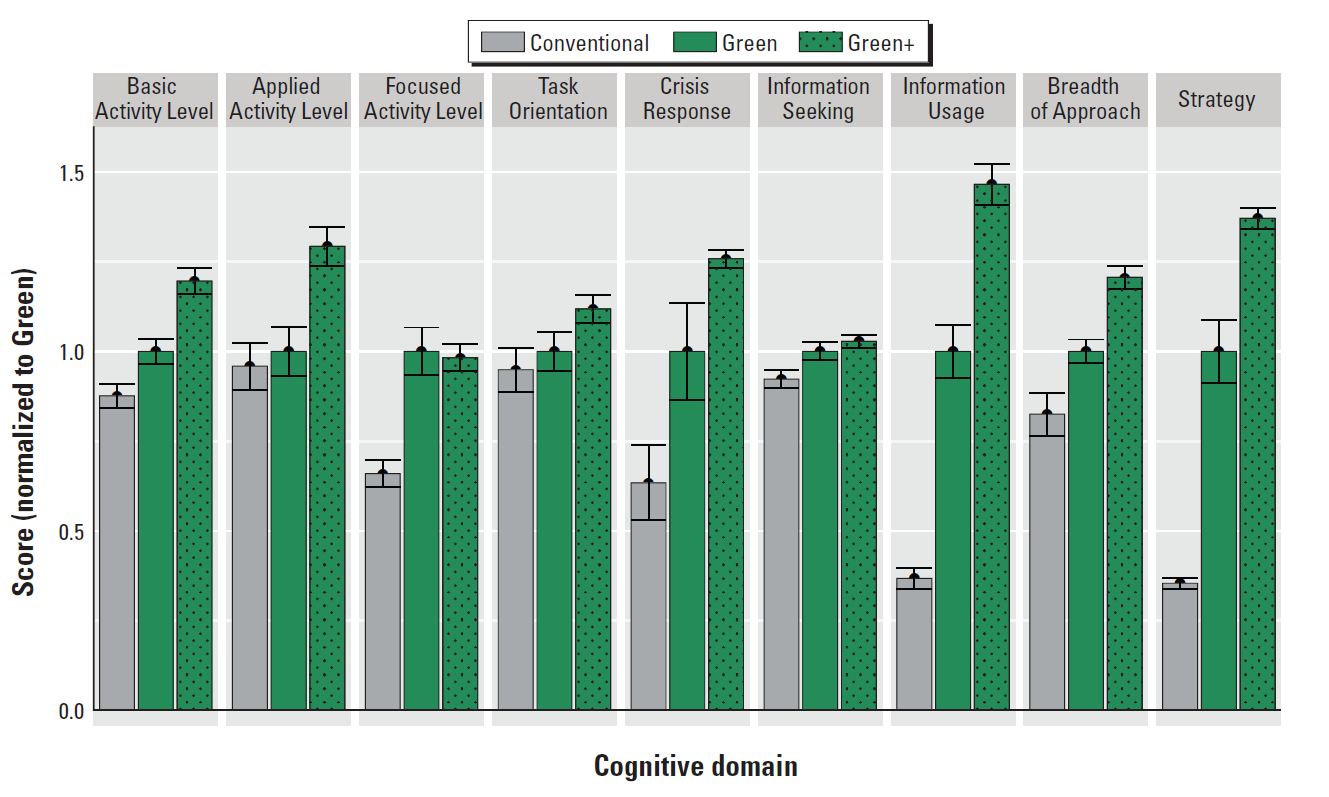
Figure 1 : Harvard Study (1400ppm, 800ppm & 500ppm)
What About Ventilation and Covid?
Carbon dioxide is also used as a proxy to measure ventilation, and therefore to help reduce the spread of infectious diseases like Covid-19. There is a logical correlation between the amount of exhaled breath in a room and the carbon dioxide concentration. It cannot directly measure the presence of coronavirus, but it can tell you when a space is inadequately ventilated. This is particularly important in classrooms and other shared spaces such as workplaces, hospitality and events.
How We Measure CO2
Monkeytronics measures CO2 using a Sensirion SCD30. This device is accurate to within 30 ppm and has a T-63 response time of 20 seconds. Each individual unit is factory calibrated and linearised for accuracy. The SCD30 uses NDIR sensor technology, with dual channels for best stability. The principle in use is that carbon dioxide absorbs particular frequencies of infrared light that pass straight through other gases such as oxygen and nitrogen. The frequency of light that a molecule can absorb is a property of the molecule, because of unique energy bandgaps between electron orbits present in the molecule. If we use a source to generate light at exactly that frequency, we can use a simple light sensor to measure the amount of light that is absorbed, and hence the concentration of carbon dioxide.
Ideal CO2 Concentration
| CO2 Concentration | Effects |
|---|---|
| Below 450 ppm | Normal background concentration in outdoor ambient air |
| 450 - 1000 ppm | Concentrations typical of occupied indoor spaces with good air exchange |
| 1000 - 2000 ppm | Complaints of drowsiness and poor air |
| 2000 - 5000 ppm | Headaches, sleepiness and stagnant, stale, stuffy air. Poor concentration, loss of attention, increased heart rate and slight nausea may also be present |
| Above 5000 ppm | Extremely high levels with serious health effects |
Temperature
Why is Temperature Important?
It's not surprising that a warm indoor environment can benefit personal health and comfort - and a comfortable classroom is a better classroom to learn in. Extensive research conducted in New Zealand over the past 15 years by He Kainga Oranga has shown the link between low indoor temperatures and increased rates of respiratory and cardiovascular illnesses, particularly in the most at-risk groups such as young children and the elderly.
It may be surprising, but research has shown that temperature alone is the key determinant of what makes a building healthy.
How We Measure Temperature
Monkeytronics uses a tiny solid state temperature sensor. The sensor element contains a tiny bipolar junction transistor. The silicon bandgap is used to directly measure the temperature. It's quite a common approach, and with careful attention to the calibration process it is extremely accurate, resulting in a cost effective and robust sensor that draws virtually no power in operation.
Ideal Temperature
| Indoor Temperature | Health Effects |
|---|---|
| Above 29°C | Evidence from the modelling of outdoor temperature indicates that health effects are likely above 29 °C |
| Below 21°C | An indoor temperature of at least 21 °C is recommended for vulnerable groups including older people, children and those with chronic illnesses, particularly cardiorespiratory disease. |
| Below 18°C | 18 °C is the WHO recommended minimum to provide a safe and well-balanced indoor temperature to protect the health of general populations during cold seasons. |
| Below 16°C | Temperatures under 16 °C have been shown to have cardiovascular effects. |
| Below 12°C | Temperatures under 12 °C have been shown to have immediate reductions in children’s lung function. |
Source WHO: Housing and Health Guidelines (ISBN: 978 92 4 155037 6)
Relative Humidity
Why is Relative Humidity Important?
Relative humidity is the amount of moisture in the air relative to the maximum amount the air could hold before it condenses into liquid water. The catch is that this maximum changes with temperature - warmer air can hold more moisture, so heating a room lowers its relative humidity even though the actual amount of water in the air hasn't changed.
In a nutshell, mould grows well in moist conditions, and some types of mould are bad for your health. In New Zealand the relative humidity is pretty much always around 60 - 70%, which is high, so we need to be careful about moisture building up indoors - and a classroom full of breathing students adds plenty of it. The best ways to keep humidity in check are the same two old friends: ventilation (open the windows and let fresh air through) and heating (warm air holds more moisture, lowering the relative humidity).
It's a really good idea to blast some fresh air through a classroom first thing in the morning. Opening the windows for just 15 minutes will get rid of stale air and make the room fresher for the day ahead.
How We Measure Relative Humidity
Our sensor measures humidity using a type of capacitor. As it turns out, the charge capacity of the surfaces on the capacitor changes with the atmosphere's relative humidity. One of the main benefits of this measurement method is that it is solid state - it has no moving parts. The whole process is based on the physical and electrical properties of the materials.
Ideal Relative Humidity
The ideal range is between 40% and 60%. Below 40% the air gets uncomfortably dry (sore throats, dry eyes, and easier transmission of airborne viruses); above 60% you start to invite mould, dust mites and damage to the building itself.
Sound Levels
Why are Sound Levels Important?
Good acoustics are an essential element of an effective teaching space. It's important that the ambient noise level is low enough that the teacher can be heard clearly all the way to the back of the class. Another vital aspect of acoustics is reverb. Reverb is the effect of sound bouncing off the walls repeatedly, which reduces the intelligibility of speech. Say you pop a balloon: it makes a very loud, almost instantaneous popping noise, releasing a sudden spike of acoustic energy. In a room with lots of reverb, the sound bounces around for ages, gradually losing energy, after the initial pop! The length of time it takes the sound to drop by 60 dB is called the Reverberation Time (RT or T60).
The T60 definition (-60dB) seems like quite an arbitrary number. It turns out that 60 dB is the normal dynamic range for orchestral music - which may explain how it was arrived upon.
How We Measure Sound Levels
The Monkeytronics monitor measures ambient noise levels directly as sound pressure levels. Because we are interested in how sound is perceived by the human ear (which is attuned to certain frequencies more than others), we do a real time spectral filtering operation on the measured sound signal to give us the human ear response. We use an A-weighting approximation, which is a good compromise between computational intensity and accuracy.
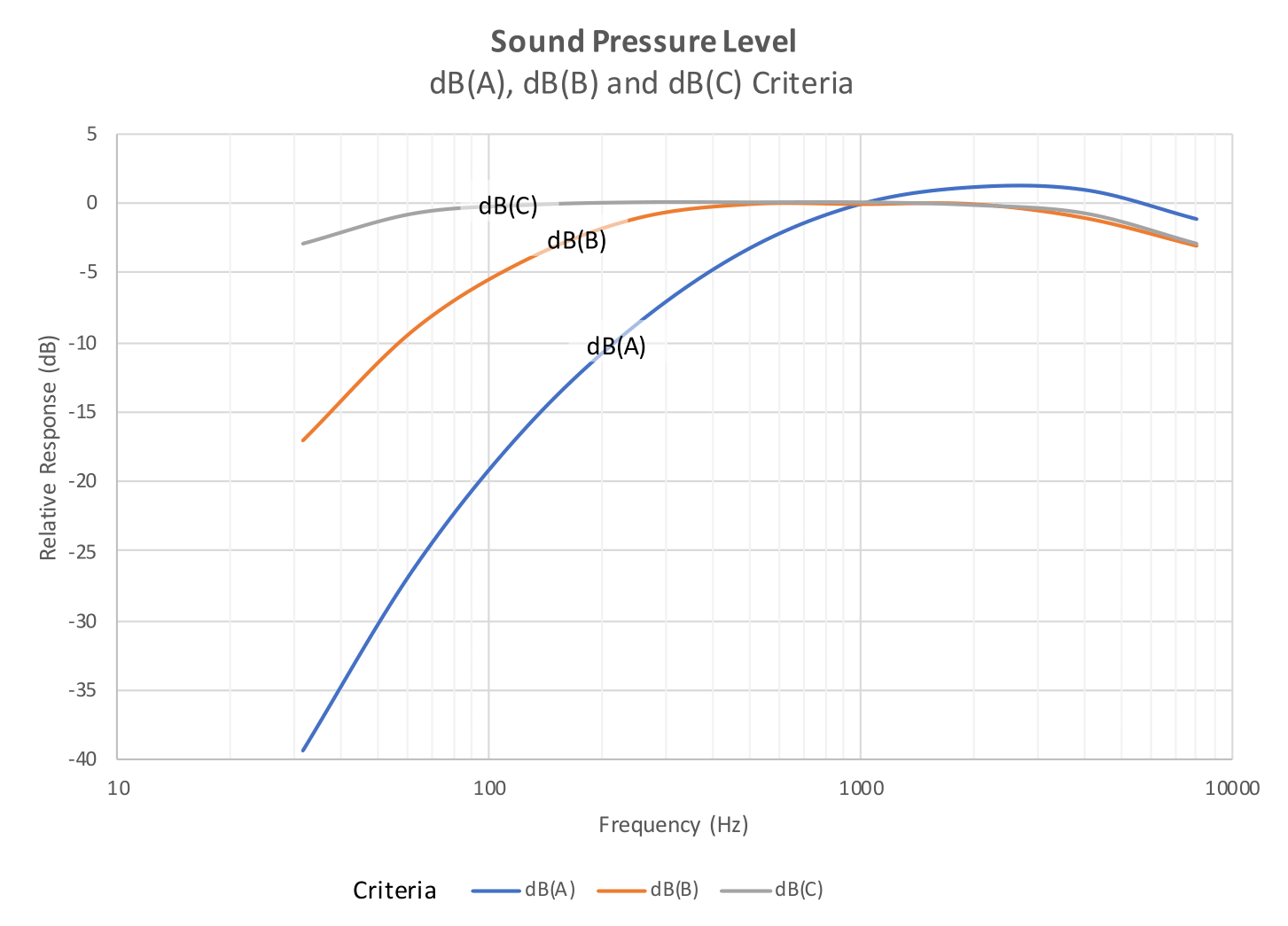
Figure 2 : Sound Pressure Weighting Filters
The Monkeytronics monitor is also capable of estimating the reverberation time using our own algorithm. Normally the reverberation time (T60) is measured under quite strict experimental conditions, using a specialised piece of kit to generate a loud short-duration noise pulse, after which the sound pressure level is observed as it decays by 60 dB. We have two problems with this. First, it omits one of the most important elements of noise damping in a classroom (the twenty-plus students and their bags and coats); and secondly, and perhaps more crucially, we don't have any of the specialised kit, so we have no means of observing a clean 60 dB decay. Instead, we continuously observe the (A-weighted) sound pressure in the room, zero in on the 20 dB decay (T20), and extrapolate to a 60 dB decay.
Ideal Acoustic Conditions
Ambient Sound Level
| dB Sound Pressure Level | What It Feels Like? |
|---|---|
| 40 dB | Soft whisper 2 meters away |
| 50 dB | Quiet speech |
| 60 dB | Conversation 1 meter away |
| 70 dB | Loud classroom chatter |
| 80 dB | Hectic classroom racket / Noisy cafeteria |
| 90 dB | Construction site with a jack hammer |
| 100 dB | A night club |
Reverberation
| RT60 Reading | What It Feels Like? |
|---|---|
| Less than 0.5 seconds | Acoustically 'dead'. This is ideal for a recording studio where you want no reverb at all. |
| 0.5 - 1.0 seconds | Perfect for classrooms: articulation is very clear, but unfortunately music will sound terrible. |
| 1.0 - 1.5 seconds | Ideal for speaking: articulation of speech is clear. Music doesn’t sound full, rich, or warm at this level. |
| 1.5 - 2.5 seconds | A good compromise if the room is to be used for both speaking and music. |
| 3.5 seconds | Better for music, but some loss of articulation. Would likely be difficult to understand speech. |
| 8.0 - 11.0 seconds | Large medieval cathedrals have a very long RT60! This is by design, as the long reverberation time is well suited to organ music or the unaccompanied voice (for example, Gregorian chants). |
Lighting
Why are Lighting Levels Important?
Lighting and visual comfort are an essential element in classrooms and have been shown to contribute to improved learning performance. In classrooms, daylight is the ideal main source of lighting, supplemented by electric lighting when there isn't enough. This gives rise to complex design requirements in terms of the size, orientation and number of windows, the surface reflectance of the walls, ceilings and floors, and the placement and power of electric lighting in the classroom.
A study carried out in Holland in 2013 showed that, by carefully controlling lighting in the classroom based on the activities undertaken, students in the experimental group showed an increase in concentration performance of around 15% and a reduction in errors made of around 30% against the control group.
How We Measure Lighting Levels
We measure lighting levels using an ambient light sensor (ALS), which has been designed to have a similar spectral response to that of the human eye. For the purposes of optimising the experience of a student, the light sensor is mounted facing forwards into the class, at 1.2 m - 1.8 m above ground level. The Monkeytronics monitor uses a transparent glass front panel, with a light transmissivity of 96%, and a rectangular field of view of 45° left to right, and top to bottom.
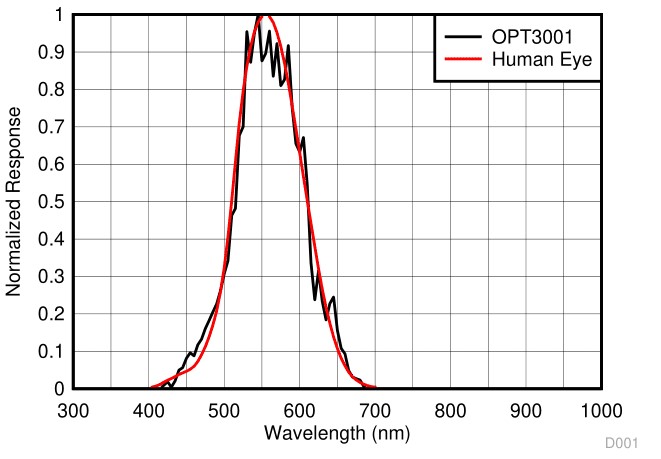
Figure 3 : Human Eye Response of Light Sensor
The following recommended ideal light levels are given as a range, because different tasks - even in the same space - require different amounts of light. In general, low contrast and detailed tasks require more light.
Ideal Lighting Levels
| Minimum Lighting Levels (Lux) | What the space is used for |
|---|---|
| 50 - 100 Lux | Corridors, stairs & storage areas |
| 200 - 300 Lux | Canteen, cafeteria and workout gymnasium |
| 300 - 500 Lux | Exhibit spaces, sports areas and general classrooms |
| 500 - 700 Lux | Science classrooms where experiments are conducted |
| 700 - 1200 Lux | Workshops and more serious scientific laboratories |
Want to go deeper on humidity, formaldehyde, particulates, VOCs and NOx? The full write-up on every measurement lives on the Homes & Offices science page.